Introduction
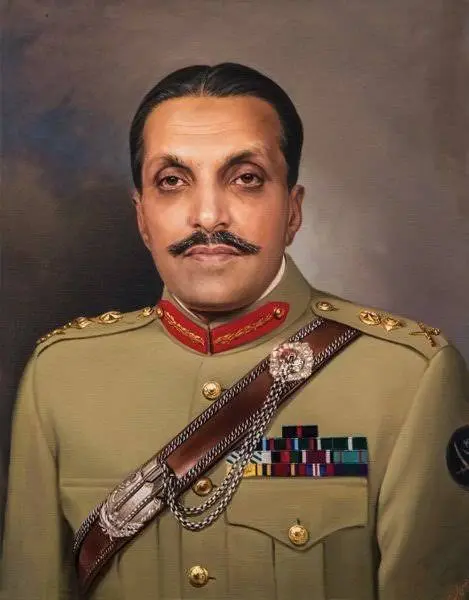
The rule of Muhammad Zia-ul-Haq from 1977 to 1988 remains one of the most influential and controversial periods in Pakistan’s history. His era reshaped the country’s political structure, religious identity, and regional dynamics. This decade cannot be understood in simple terms—it includes both achievements and long-term consequences.
Rise to Power: The 1977 Coup
In July 1977, Zia-ul-Haq overthrew the elected government of Zulfikar Ali Bhutto through a military coup.
- Martial law was imposed
- Political activities were restricted
- Bhutto was later executed in 1979
This marked the beginning of military dominance over civilian politics, weakening democratic institutions for years to come.
Islamization Policies
One of Zia’s central agendas was the Islamization of Pakistan:
- Introduction of Hudood Ordinances (1979)
- Implementation of Zakat and Ushr system
- Establishment of the Federal Shariat Court
Impact:
Society experienced a shift toward conservative values
Religion became more deeply integrated into state affairs
Critics argue these policies disproportionately affected women and minorities
Afghan War and Foreign Policy
The Soviet invasion of Afghanistan in 1979 placed Pakistan at the center of global politics.
- Pakistan allied with the United States and Saudi Arabia
- Support was provided to Afghan Mujahideen
- Massive financial and military aid flowed into Pakistan
Consequences:
- Strengthened Pakistan’s strategic importance
- Rise of Kalashnikov culture and drug trafficking
- Growth of militancy and extremism
Economic Policies and Achievements
Despite political repression, Zia’s era saw some economic progress:
- Increase in foreign remittances (especially from the Middle East)
- Growth in agriculture and small industries
- Relative economic stability in the 1980s
These achievements provided short-term economic relief, though critics argue they lacked long-term sustainability.
Perspective from Akbar Zaidi
According to Akbar Zaidi:
- Islamization was not only religious but also a political strategy
- The Afghan war reshaped Pakistan’s internal and external policies
- Economic growth existed, but structural issues remained unresolved
His analysis suggests that Zia’s policies created long-term socio-political challenges.
Balochistan faced significant challenges during Zia’s rule:
- Increased military control and political suppression
- Lack of focus on development and infrastructure
- Growing distrust between the federal government and local population
Result:
- Heightened sense of deprivation among Baloch people
- Foundations of long-term unrest and instability
Political System and Governance
- Introduction of non-party elections (1985)
- Controlled political environment
- Restrictions on media and freedom of expression
These measures created a hybrid political system, where civilian structures existed but remained under military influence.
“In my opinion, Zia-ul-Haq’s era was one of the most transformative yet controversial periods in Pakistan’s history. While he achieved certain economic and strategic successes, his policies also introduced deep social and political changes that continue to affect Pakistan today, especially in terms of extremism and provincial tensions.” (Sadia Yousaf)
Afghan War and Foreign Policy
During the rule of Muhammad Zia-ul-Haq, Pakistan played a crucial role in the Afghan War after the Soviet Union invaded Afghanistan in 1979. Under his leadership, Pakistan formed a strategic alliance with the United States and Saudi Arabia to support the Afghan Mujahideen against Soviet forces. This cooperation brought significant financial and military aid to Pakistan, strengthening its position on the global stage.
However, this policy also had serious long-term consequences. The influx of weapons and foreign funding contributed to the rise of what is often referred to as the “Kalashnikov culture” in Pakistan. Additionally, drug trafficking and militancy increased, which later led to internal security challenges. While Zia’s foreign policy enhanced Pakistan’s geopolitical importance during the Cold War, it also played a role in shaping issues that the country continues to face today.
Conclusion
The decade of Muhammad Zia-ul-Haq was not just about one ruler—it was about a complete transformation of Pakistan’s identity and system.
- Islamization reshaped society
- The Afghan war altered regional dynamics
- Political control weakened democracy
- Provincial issues, especially in Balochistan, intensified
His legacy remains deeply embedded in Pakistan’s present, making his era essential to understand for anyone studying the country’s history.